
Sperm Leakage Solutions for Men in Mumbai g.i.g.o.l.o
Discover the causes and effective solutions for sperm leakage and urine leakage that many men face. Get expert guidance from a mumbai g.i.g.o.l.o to understand and address this issue.
HEALTH
Satya the elite male companion in mumbai
5/27/20264 min read


Understanding Sperm Leakage in Urine Causes, Myths, and Medical Solutions
Subheading: A comprehensive, professional guide to male urological health, pelvic floor strength, and restoring confidence.
Breaking the Silence
Male reproductive health is surrounded by various myths, unspoken anxieties, and misinformation. One of the most common yet rarely discussed concerns among men is the phenomenon of sperm leakage—either during, before, or immediately after urination.
Scientifically termed Spermatorrhea (or sometimes linked to conditions like Retrograde Ejaculation), noticing a cloudy discharge or semen-like fluid in your urine can cause immediate panic. Many men fear it leads to physical weakness, loss of vitality, or infertility. However, from a urological standpoint, this is a highly treatable and often completely normal physiological event.
This detailed guide breaks down the science behind semen leakage in urine, separates facts from myths, and provides actionable, medically approved ways to stop it.
The Science – Is it Actually Sperm Leakage?
Before jumping into panic, it is crucial to understand what is actually leaving the body.
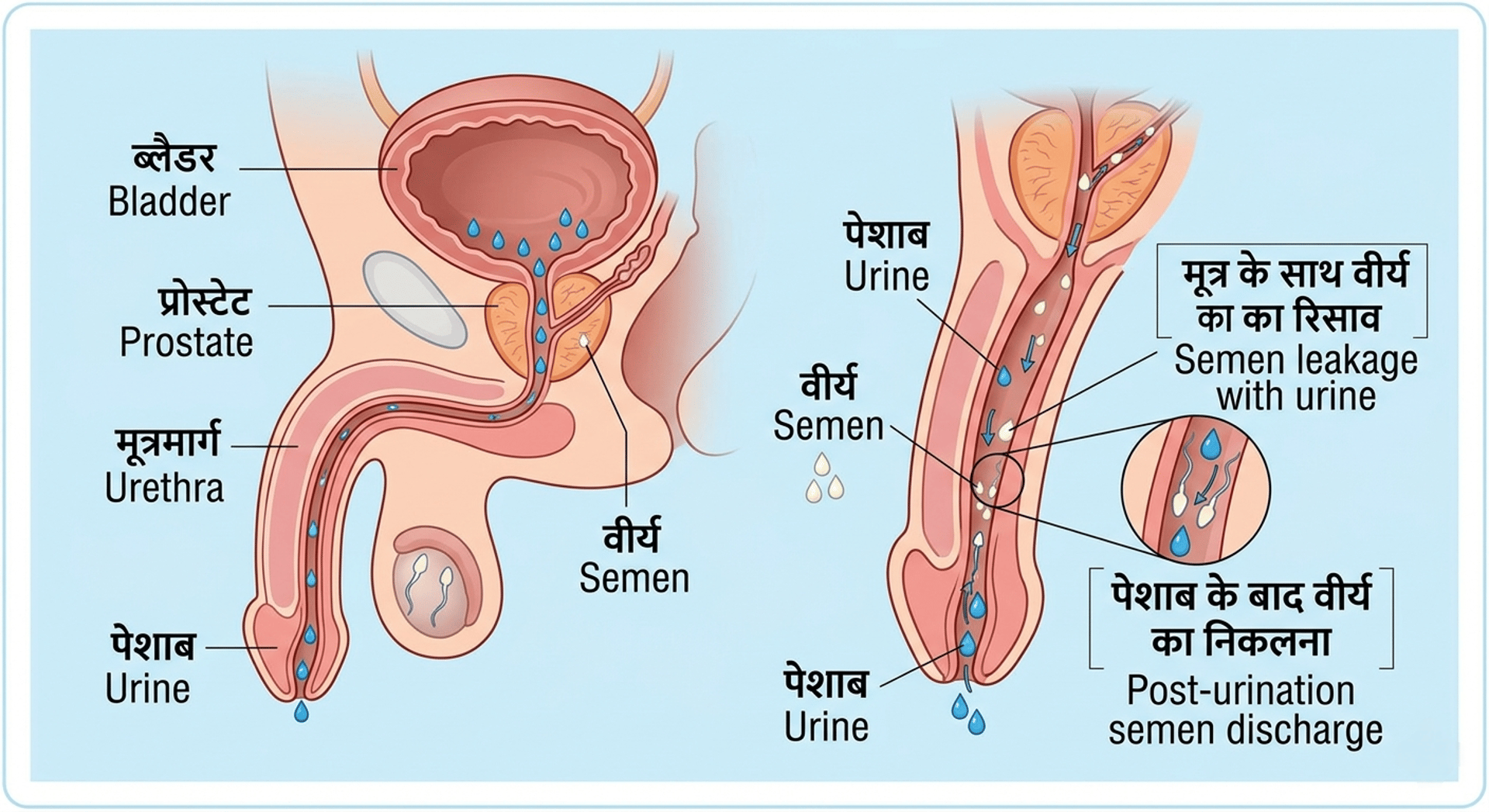
Most of the time, what men perceive as "sperm leakage" during urination is not pure sperm. It is a mix of fluids from the prostate gland and the seminal vesicles (known as pre-ejaculatory fluid or prostatic fluid).
Why does it mix with urine?
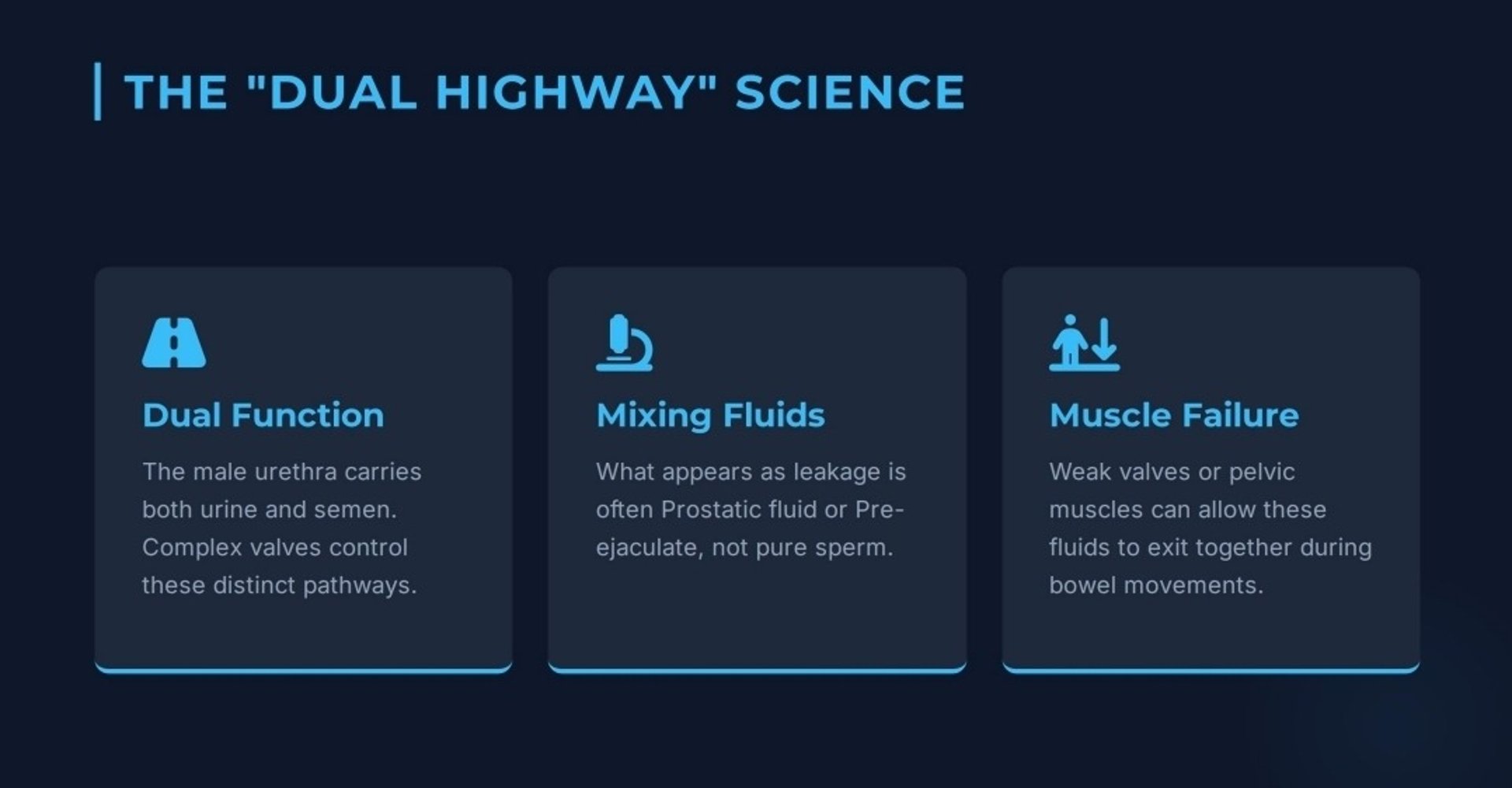
The male urethra acts as a dual highway: it carries both urine from the bladder and semen from the reproductive system. A complex system of muscular valves controls these gates. If these valves or surrounding muscles experience temporary weakness, irritation, or over-activation, the fluids can overlap, causing them to exit together during urination or bowel movements.
Primary Causes of Sperm Leakage in Urine
To stop sperm leakage, we must first target the underlying trigger. Medically, it usually boils down to four main factors:
1. Overactive Seminal Vesicles / High Sexual Abstinence
When a man goes through a prolonged period without ejaculation (no sexual intercourse or masturbation), the seminal vesicles become completely full. The body naturally tries to eliminate the excess fluid. When you put pressure on your pelvic muscles during urination or a bowel movement, this excess prostatic fluid simply leaks out. This is 100% normal and harmless.
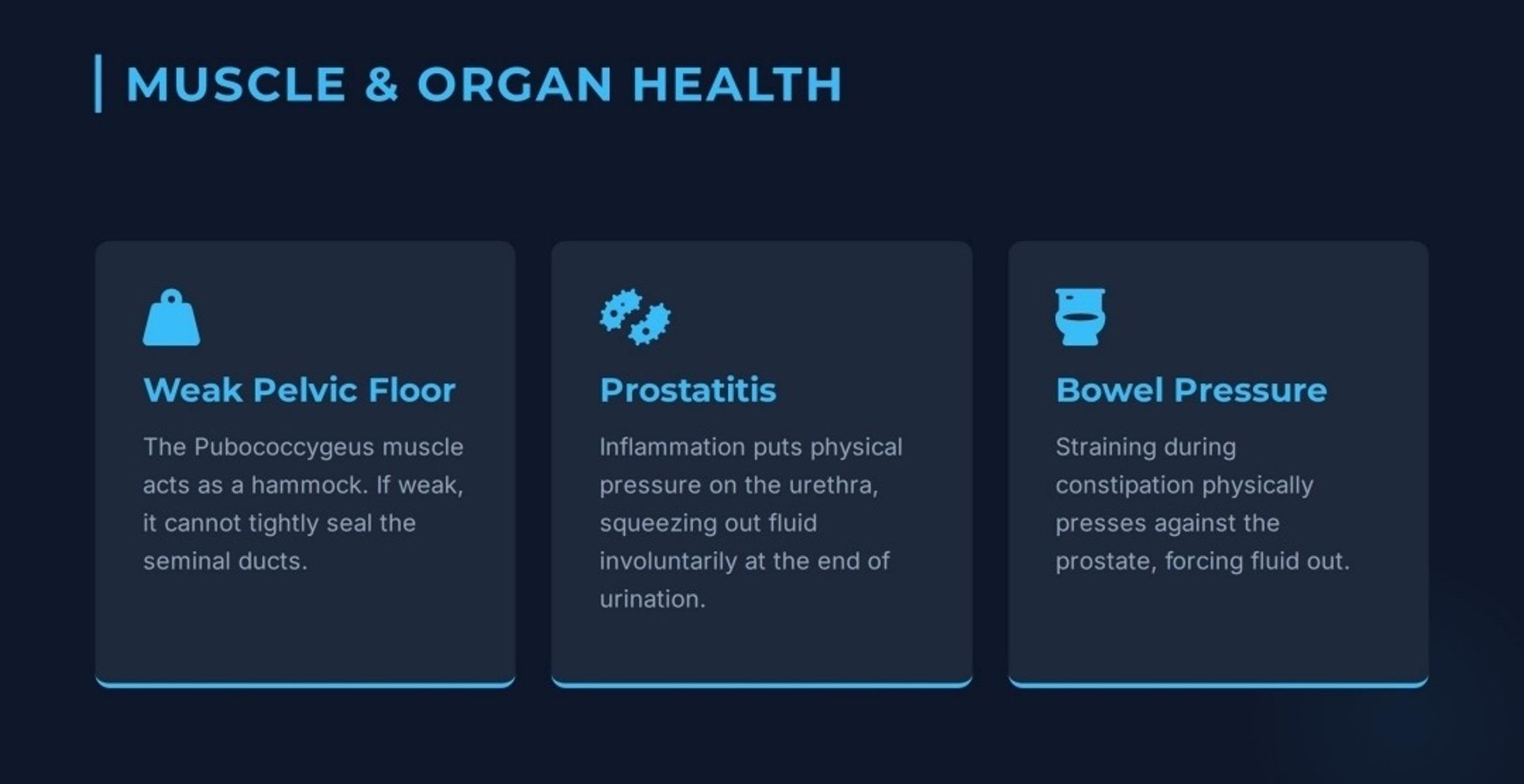
2. Weak Pelvic Floor Muscles (Pubococcygeus Muscle)
The pelvic floor muscles act as a hammock that supports the bladder and reproductive organs. If these muscles are weak due to a sedentary lifestyle, lack of physical activity, or poor posture, they cannot tightly seal the seminal ducts, leading to involuntary leaks when urinating.
3. Prostatitis (Congestion or Infection)
The prostate gland produces the fluid that nourishes sperm. If the prostate becomes inflamed or infected (a condition called Prostatitis), it swells up. This swelling puts physical pressure on the urethra and seminal ducts, squeezing out fluid involuntarily, especially at the end of urination.
4. Constipation and Bowel Pressure
The prostate gland sits directly in front of the rectum. When a person is severely constipated and strains heavily to pass stool, the hard stool physically presses against the prostate gland, forcing prostatic fluid out through the urethra.
Actionable Solutions – How to Stop Sperm Leakage
If the leakage is frequent and causing discomfort, it can be easily managed through targeted lifestyle changes and physical therapies.
1. The Power of Kegel Exercises (Pelvic Floor Strengthening)
Just like any other muscle, your pelvic floor can be trained. Kegel exercises are the gold standard for stopping involuntary leakage.
How to do it: The next time you urinate, try to intentionally stop the flow of urine mid-stream. The muscles you tighten to do this are your pelvic floor muscles.
The Routine: Contract (squeeze) these muscles for 5 seconds, then relax for 5 seconds. Repeat this 10 to 15 times, thrice a day. You can do this while sitting at your desk, driving, or lying down. Within 4–6 weeks, these strengthened muscles will prevent any involuntary leaks.
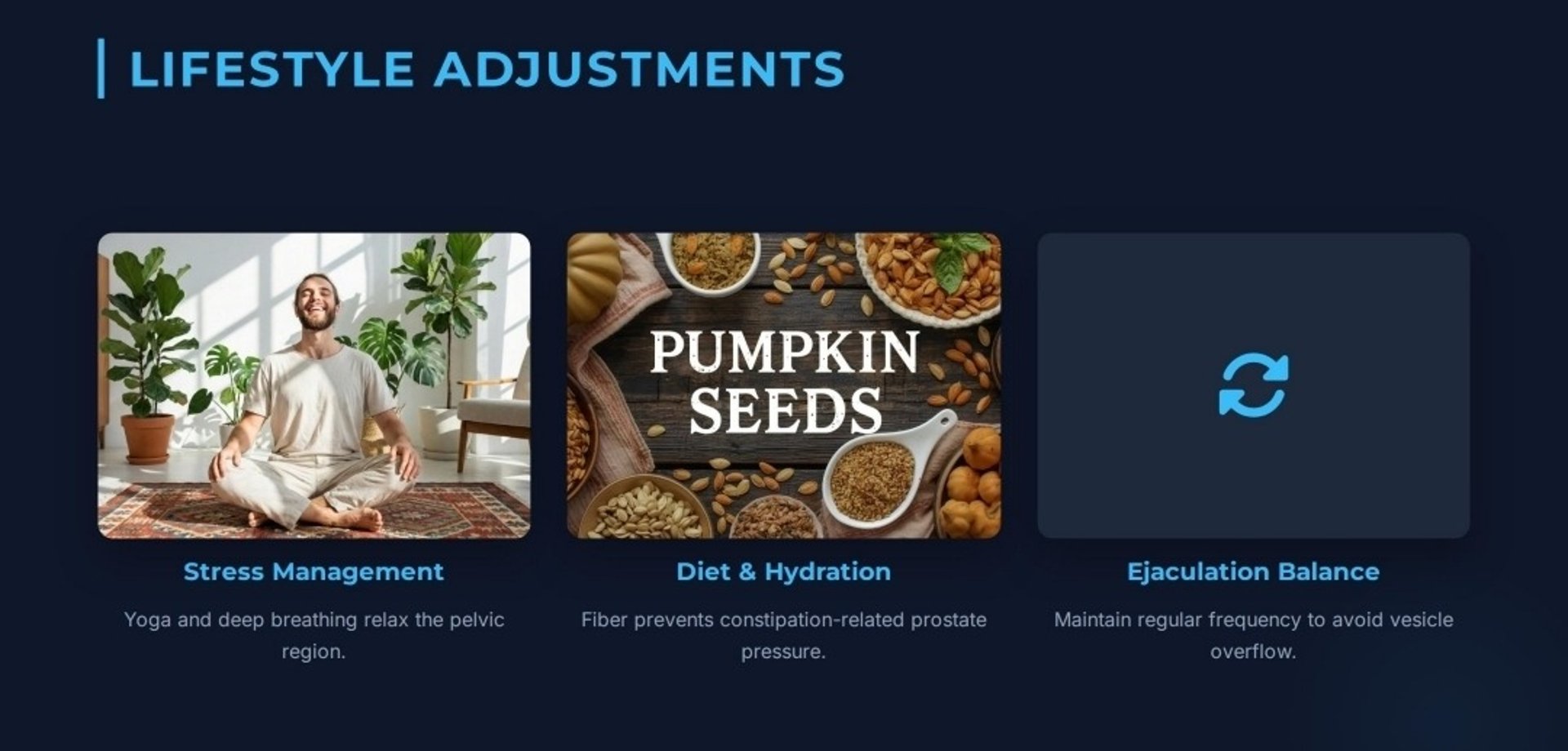
2. Maintain a Healthy Ejaculation Frequency
Extreme suppression of natural sexual urges can backfire. Maintaining a balanced, regular frequency of ejaculation (whether through a partner or safe masturbation) keeps the seminal vesicles functioning at an optimal volume, reducing spontaneous overflows.
3. Optimize Your Diet & Prevent Constipation
Since straining during bowel movements triggers leakage, your digestive health matters.
Fiber-Rich Diet: Include whole grains, oats, green vegetables, and fruits to keep stools soft.
Hydration: Drink at least 3 liters of water daily to ensure smooth digestion and flush out any mild urinary tract infections.
4. Manage Stress and Anxiety
The nervous system closely regulates ejaculation and urinary valves. High stress, performance anxiety, or constant guilt regarding sexual thoughts keeps the pelvic muscles tensed, disrupting their natural coordination. Practices like yoga, deep breathing, and regular sleep help relax the pelvic region.
Natural & Safe Supplements for Urological Health
To support muscle tone and prostate health, certain natural elements can be highly beneficial:
Zinc-Rich Foods: Zinc is crucial for male reproductive health and prostate function. Pumpkin seeds, eggs, legumes, and lean meats are excellent sources.
Saw Palmetto: A widely recognized natural herb used in premium male supplements that supports prostate health and regulates fluid congestion.
Ashwagandha & Safed Musli (Adaptogens): These traditional herbs help balance male hormone levels, reduce stress-induced nervous weakness, and improve involuntary muscle control.
When to See a Urologist
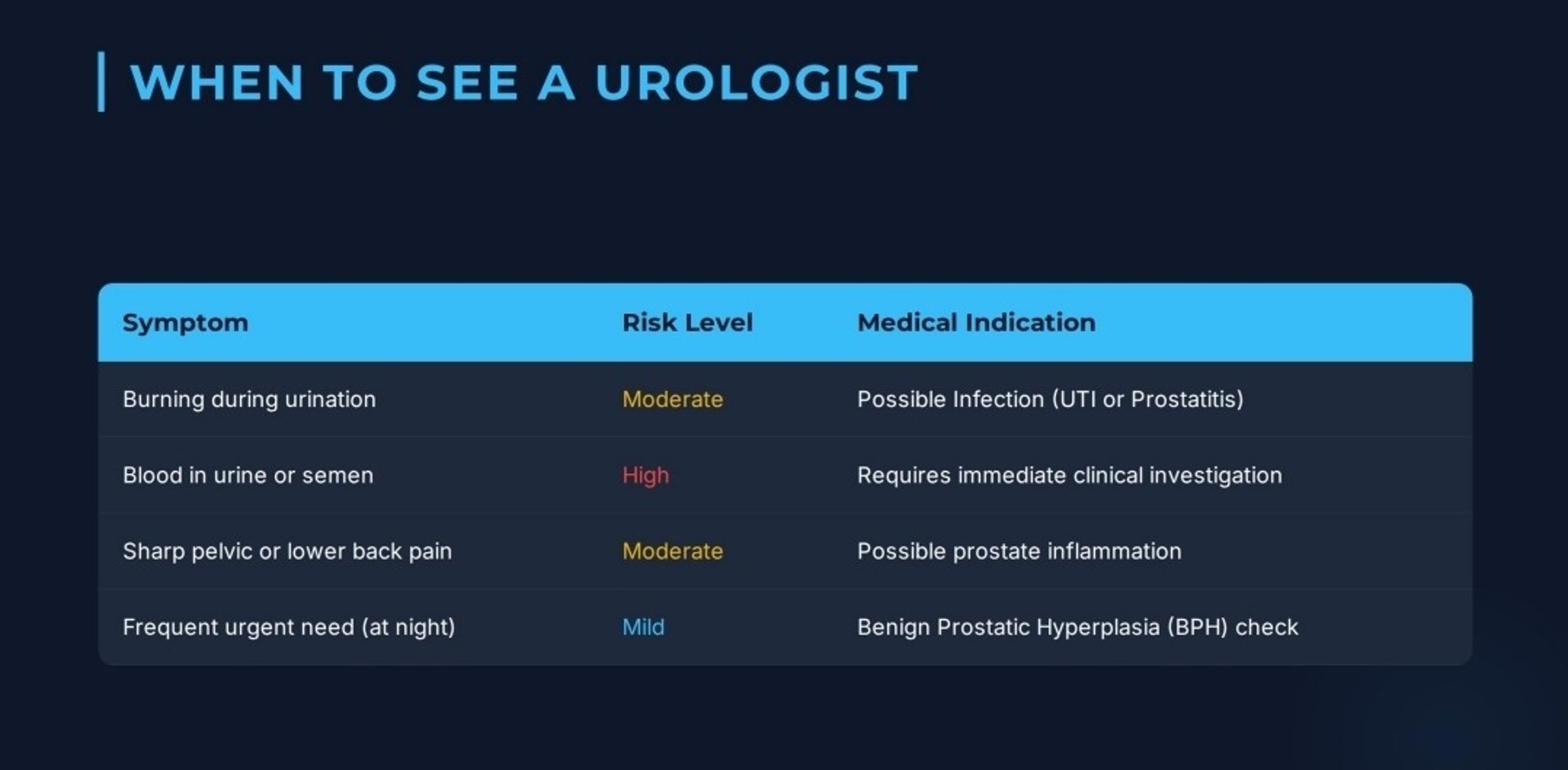
While most cases are benign and easily fixed with lifestyle changes, you should consult a doctor if the leakage is accompanied by:
A burning sensation or sharp pain during urination or ejaculation.
Blood in the urine or semen.
A frequent, urgent need to urinate, especially at night.
Lower back or pelvic pain.
[Medical Disclaimer]
Disclaimer: The information provided in this article is strictly for educational purposes and should not be treated as professional medical advice. If you experience persistent pain, irritation, or distressing symptoms, please consult a certified urologist for a proper diagnosis.
🚀 ✦ Prioritize Your Wellness & Confidence
Absolute lifestyle luxury isn't just about external presentation—it’s about inner vitality, health, and flawless physical confidence. If you want to refine your personal lifestyle, clear your doubts, or seek direct, elite support with 100% guarded confidentiality, we are here to guide you.